



Why non-live sports content now drives fan engagement, audience growth and long-term value
The beauty of live sport has always been in the immediacy of the drama. In a world where streaming has overtaken traditional linear broadcast as the main way consumers watch entertaining content, sport provides one of the only “appointment to view” moments for an audience. You only get one chance to see something live, but with non-live sports content you can drive fan engagement and loyalty also once the event is over.
As sport began to see competition arriving from other areas of entertainment several years ago, it realised it needed to bridge the gap between the unpredictable and emotional moments live action delivers. Non-live content does just that. It builds a fan relationship, explains the sport, gives it texture, introduces the people behind it and keeps it present when nothing is happening on the field of play. Live moments may deliver spikes of attention, but non-live content is what turns that attention into loyalty and long-term value.
The importance of non-live sports content has never been higher. And whilst many rightsholders recognise its usefulness, delivering content and high-quality content are very different achievements.
The changing face of sports content: Why non-live now matters more than ever
There’s a stubborn myth that non-live sports content isn’t premium because it doesn’t make headlines or drive bidding wars. As a result, it often gets lumped in with “social” and quietly deprioritised.
Fans don’t see it that way. Audiences now spend more time with the stories around the game than the game itself. They follow players year-round. They consume highlights, explainers, behind-the-scenes footage and personality-led content daily. The live event is often just the anchor point, not the main act.
This shift is clear in how many federations have evolved their approach. Live production remains the backbone, but it’s the non-live ecosystem around it that has helped drive sustained audience growth and made the sport feel present, human and accessible between tournaments.
Strong non-live content also keeps a sport visible between events. Instead of dropping out of feeds and conversations, it maintains momentum. Weekly and monthly formats give fans a reason to come back, even when there’s no tournament taking place.
Younger audiences in particular respond far better to this approach. Many barely watch full matches, but they engage heavily with short-form, story-led content that travels well across platforms. That behaviour doesn’t disappear just because a rights holder wishes it would.
There’s also the quieter benefit that broadcasters get better storytelling tools with far less friction. Context, narratives and ready-made features lift live coverage and reduce the need to explain everything from scratch.
Finally, sponsors benefit too. Non-live formats are pivotal for a successful sports marketing strategy as they allow brands to integrate into stories and environments rather than hoping for recall from a logo flashed on a board. It becomes another layer where brands can weave in their own values and illustrate in a more explicit manner how they match those of the sport it’s supporting.
Why strong non-live sports content outperforms guesswork
When non-live sports content is planned properly, it can often match reactive, last-minute output in terms of reach, going beyond die-hard fans and telling a deeper story.
It humanises athletes and builds emotional attachment that goes beyond results.
One of the clearest examples of this approach comes from long-form documentary work around elite teams. Speaking about the development of Founding Fathers, a documentary on Denmark’s national handball team, Infront Productions’ Executive Producer Nicklas Vinde explains that the objective wasn’t to retell success, but to reframe it.
“We wanted to show the real human side… not only the glory, but also the struggles.”
Rather than relying on archive or retrospective narration, the production was built around direct, unscripted interaction between players. The creative setup was deliberately engineered to create honesty.
“We created a whole scheme for how they would be sat around the table… so the conversation would cross the table.”
The result was a documentary that married performance with the relationships, personality and shared history that came from the highs and lows of sport.
This is where non-live content shifts from being supportive to being foundational. It doesn’t just explain the sport, it gives fans a reason to care about it.
The fan journey is a long one, both in terms of converting non-fans into someone who would actively switch on and watch your sport (making that appoint to view) as well as carrying casual and die-hard fans from one event to the next. Context is king.
Non-live content can create that anticipation before events, answering the key questions:
- Why does this competition matter?
- Who should fans be watching?
- What’s at stake?
Pre-event programming and hype actively help build an audience by giving people a reason to tune in when coverage starts.
During events, shoulder programming, explainers and recap shows help fans stay engaged and understand what they’re seeing. For a global sport like badminton, with constant tour stops, games and action, this kind of support content is essential rather than optional. It removes some levels of complexity for casuals whilst reminding those who have been watching for years where to connect the dots.
After events, storytelling reframes outcomes and looks ahead. What did this result mean? What happens next? Who emerged, who struggled, and why should fans care? These moments extend the life of the event far beyond the final point.
Over time, evergreen content around players, culture, history and identity build familiarity and trust. Layer in digital-first formats designed to travel across YouTube and social platforms, and the sport becomes a year-round presence rather than something that briefly surfaces and disappears.
Risks for rights holders without a non-live sports content strategy
Most rightsholders know that non-live sports content can provide this context to fans, and many don’t struggle because they lack ideas. Where they often find issues is in creating the structure where these stories can shine.
Without a clear editorial spine, content becomes reactive. Output is driven by availability rather than purpose. Slow approval processes kill turnaround and relevance. Social teams are left trying to rescue weak production with clever captions. Internal crews get stretched across everything and end up excelling at nothing.
A common mistake is putting technology decisions before storytelling decisions. New tools and platforms get rolled out before anyone has answered the basic question of what stories need telling and why. Most importantly, how can a new platform deliver a better job than something that already exists?
Access is another quiet but decisive factor. Host broadcasters, like Infront Productions are at many of our rightsholder events, already operating inside highly restricted areas, with the trust and permissions that make genuine storytelling possible.
For rightsholders who want proof of what happens when planning, access and execution align, just take a look at what Infront Productions managed with the Badminton World Federation.
Badminton is a truly global sport, but one that faces a familiar challenge: A busy international calendar, constant tour stops, multiple courts in play at once, and an audience split between die-hard fans and casual viewers. Live production remains essential, but on its own it doesn’t solve the problem of continuity or connection.
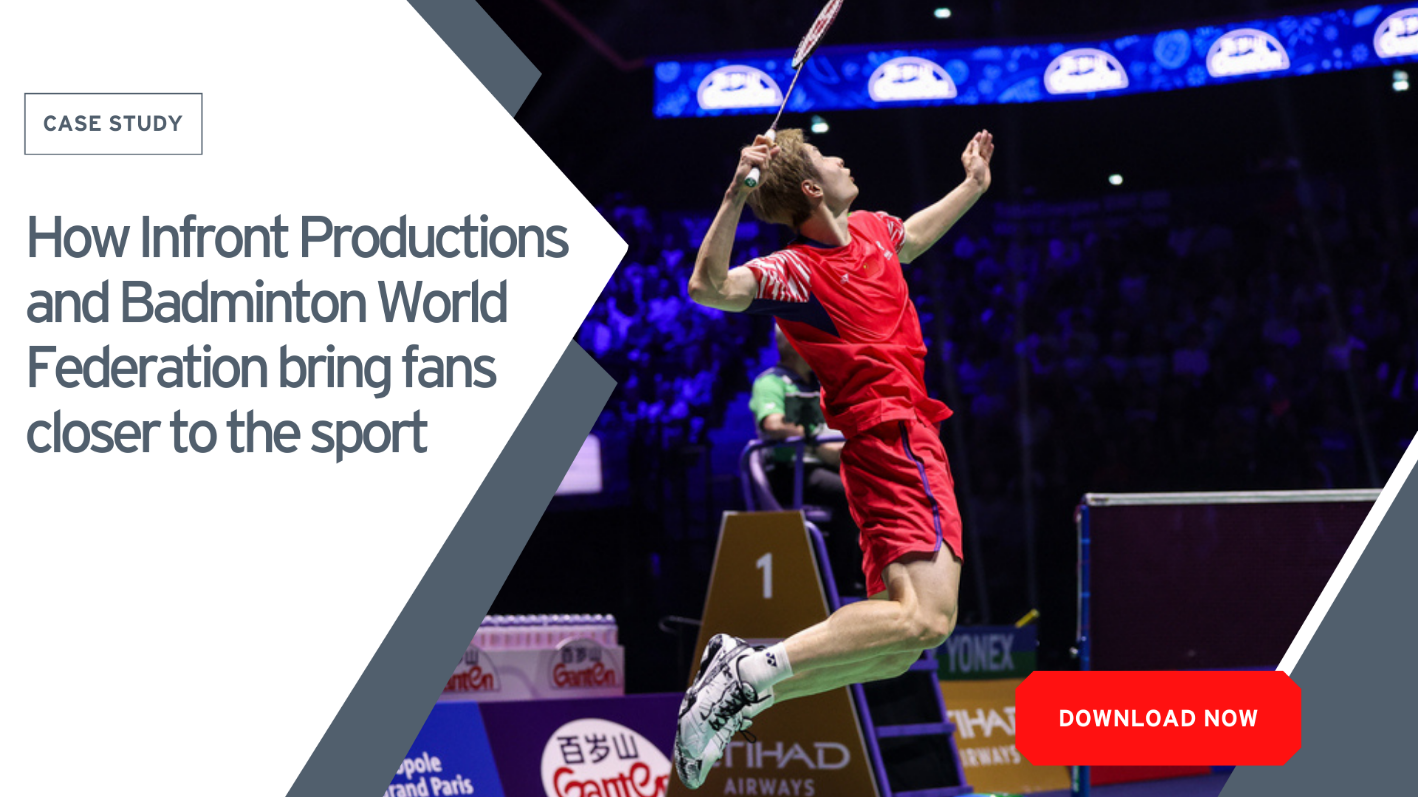
Since 2018, Infront Productions has worked with the BWF to build a structured non-live ecosystem around the live product. Rather than relying on one-off social clips or reactive posting, the focus has been on a tiered, repeatable content model designed to serve the full fan journey.
The results speak for themselves. Since the partnership began, the BWF’s global fan base has grown by around 50%, supported by a consistent, year-round content strategy that complements live coverage with evergreen contents rather than competing with it. Broadcasters receive richer sports storytelling assets, fans stay engaged between tournaments, and sponsors gain integration opportunities that extend beyond static exposure.
It’s a reminder that non-live sports content isn’t about volume or novelty. It’s about structure, access and clarity of purpose.
Live rights build moments, non-live stories build loyalty
Rightsholders that invest in year-round storytelling will own the relationship with fans, not just rent their attention on event days. Those that continue to treat non-live as an afterthought will keep paying more for diminishing returns, wondering why audiences drift away between tournaments.
The gap between those two approaches is widening. Having a dedicated strategy that links with the story the rightsholder is vital in the quest for attention.
FAQ
What is non-live sports content and why is it important?
Non-live sports content is everything around the live moment, including features, explainers, behind-the-scenes, interviews, recaps and storytelling formats that live beyond the final whistle. It matters because live sport delivers attention in spikes, while non-live content turns that attention into understanding, loyalty and long-term value. Without it, sports vanish between events and fans drift elsewhere.
How does non-live content drive fan engagement?
It provides context. It explains why something matters, who to care about and what’s coming next. It humanises athletes, builds emotional links and keeps the sport present when nothing is happening on the field. Over time, this creates habit and familiarity, not just occasional interest.
What types of non-live content work best for sports?
- Repeatable formats that serve the full fan journey work best:
- Pre-event build-up that sets stakes and storylines
- Shoulder programming during events to explain, recap and guide
- Post-event storytelling that reframes results and looks ahead
- Evergreen player, culture and history content that travels year-round
Short-form, story-led content designed for digital platforms consistently outperforms one-off reactive clips.
How can rightsholders monetise non-live content?
Non-live content creates space for deeper sponsor integration, not just logo exposure. Brands can align with stories, values and environments in a way live broadcasts rarely allow. It also delivers richer assets for broadcasters, extends event value beyond competition days and supports sustained audience growth, which underpins long-term commercial returns.
Why do younger audiences prefer non-live formats?
Because they don’t consume sport the old way. Many don’t watch full matches but engage daily with highlights, explainers and personality-driven content across social and digital platforms. That behaviour isn’t a phase. Non-live content meets them where they already are, instead of waiting for them to turn up out of habit.

/Images-Logos/20062025_Blog_radio%20frequency.png)

.png)