

Gen Z football sponsorship is forcing brands to rethink how they approach the sport’s biggest commercial platforms. Football sponsorship still delivers extraordinary scale. The biggest competitions reach billions, stadium visibility remains one of the most recognisable assets in sport, and broadcast exposure continues to anchor the commercial model.
Yet for many brands, a quiet tension is emerging.
Reach grows, but attention is fragmenting. The number of impressions delivered through football has never been higher, but the depth of audience connection is becoming harder to secure. For sponsorship leaders, the question has to go beyond how many people saw a logo and more to whether those audiences actually engaged with the brand behind it. As we’ve said elsewhere, it’s about making sure people aren’t just walking past the shop window but actually coming in and looking to consume.
This shift is particularly visible among younger audiences. According to the 2025 Kearney Report “From Passion to Profit” Gen Z fans are consuming 15 percent less sports on linear TV than their older counterparts. Altman Solon’s recent report backs this up, stating that younger fans are less likely to watch full live games, with just 39% of 18–24s typically watching the entire event versus 61% among 65+.
As media consumption habits change, traditional broadcast exposure alone is increasingly struggling to deliver the cultural relevance that sponsors seek.
For brands, this raises an important strategic question: how should football sponsorship evolve when audience attention increasingly moves beyond the broadcast itself?
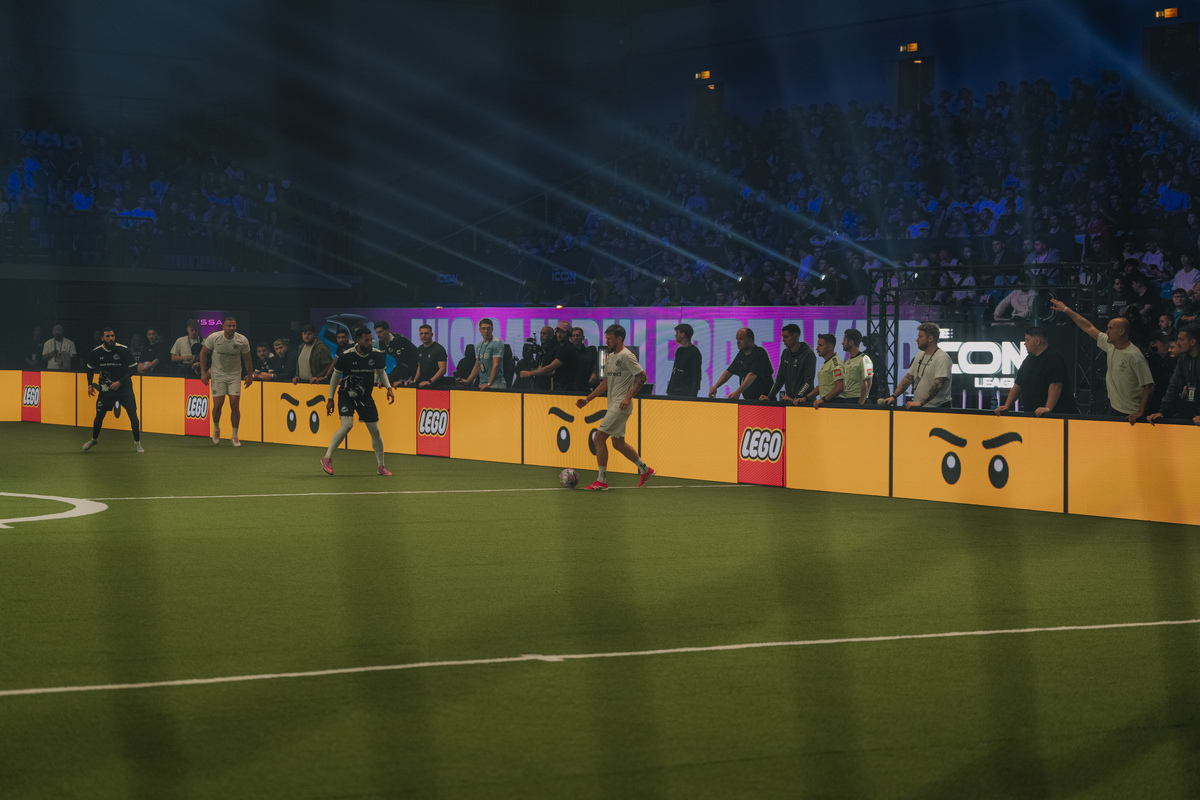
One emerging answer can already be seen in creator-driven competitions such as the ICON League, where ICON League sponsorship is beginning to reshape how younger football audiences engage with the sport.
The Gen Z football sponsorship portfolio challenge
For decades, football sponsorship has been built around a relatively stable equation. Large audiences, predictable broadcast windows and highly visible commercial inventory.
For many brands, that model still works. Elite competitions remain powerful awareness platforms and the global appeal of football remains unmatched. It has gone beyond a sport and is more of a religion. Not much can challenge the attraction of the beautiful game.
However, the way audiences experience football is evolving, as highlighted by the above data. Fans no longer consume the game in a single environment. Matches are watched alongside social media feeds, clips are shared instantly across platforms, and conversation often happens outside the broadcast itself.
In practical terms, this creates a gap between exposure and engagement.
A perimeter board might reach millions during a televised match, but the moments that drive conversation increasingly happen elsewhere, in short-form video, livestream commentary, or creator-driven communities. Traditional visibility is no longer enough to drive engagement, as 27% of fans report being most motivated to engage with a brand online when offered exclusive content or access rather than just seeing a logo on a shirt (Next Play).
For sponsorship strategies built primarily around broadcast visibility, this creates a portfolio imbalance. Brands achieve reach, but not always relevance.
How football consumption Is changing
Younger audiences are not abandoning football, but are consuming it differently. A shift that is forcing brands to rethink their approach to Gen Z football sponsorship.
Gen Z fans move fluidly between platforms such as Twitch, TikTok and YouTube, often engaging with the sport through clips, commentary, reaction streams and highlight packages rather than the full ninety-minute broadcast.
The second-screen experience is now a default part of sports consumption. Matches are followed alongside social platforms where moments are remixed, debated and amplified by creators and fan communities.
Just as importantly, identity within sport is becoming increasingly personality-led. Younger audiences are often drawn first to individuals. Think creators, streamers, athletes or entertainers. The institutions they represent take a back seat.
This shift has been accelerated by the creator economy, where influencers and digital personalities build communities that operate independently of traditional media structures. When these personalities engage with sport, they bring their audiences with them.
As a result, the traditional hierarchy of sport consumption is being reconfigured. Clubs and leagues remain important, but they increasingly coexist alongside personalities who shape how fans experience the game.
The rise of creator-driven football
These behavioural shifts have helped create a new category within football itself.
Across different markets, short-format competitions, creator leagues and influencer-driven football events are beginning to emerge. These formats typically feature smaller teams, shorter matches and personalities drawn from professional sport, streaming culture and entertainment.
The formats vary, but the underlying logic is consistent. They are designed to mirror the way digital-native audiences consume content: faster, personality-led and built for social distribution.
Rather than competing with traditional football, many of these competitions operate alongside it. They blend elements of sport, entertainment and livestream culture, creating events that are as much about the personalities involved as the results on the pitch.
This explains why the category has expanded quickly in recent years. Creator-driven football formats do not exist because traditional football has failed. They exist because the broader media ecosystem around sport has changed.
The commercial implication for brands
For sponsors, this shift raises an increasingly important strategic question.
Where should brands place future sponsorship investment?
Traditional football properties remain the most effective platforms for scale and prestige. But as media behaviour evolves, relying solely on broadcast-led sponsorship risks leaving gaps in how brands connect with younger audiences.
Many sponsorship leaders are therefore beginning to think in terms of portfolio diversification.
In this model, traditional rights deliver reach and global visibility, while digital-native sports properties provide cultural relevance and deeper engagement with younger fan communities.
Both roles are complementary rather than competitive.
The objective is not to replace traditional football sponsorship, but to expand the ecosystem through which brands participate in the sport.

Using the ICON League as a canvas
One example of this shift can be seen in the emergence of creator-driven football competitions such as the ICON League. These formats are designed for digital-first audiences and illustrate how ICON League sponsorship is beginning to expand the traditional football sponsorship ecosystem.
This shift becomes more tangible when looking at how ICON League partnership opportunities are structured for brands.
The league combines professional football figures, creators and entertainers in a short-format competition designed for digital-first audiences. Matches are played five-a-side on a smaller pitch with shorter halves and fewer interruptions, creating a faster viewing experience suited to streaming platforms.
Distribution is similarly aligned with how younger audiences consume sport, with live broadcasts on streaming platforms and significant engagement across social channels. In one recent season, the league generated around 1.4 million unique viewers on Twitch and more than 663 million social impressions, illustrating the scale that creator-led formats can achieve within digital ecosystems.
The league itself is not the story here. It is one example of a broader structural change taking place within football.
For brands evaluating their sponsorship strategies, formats like this provide a glimpse of how football properties may evolve as media consumption continues to shift.
Understanding that evolution will be critical for any organisation looking to remain relevant to the next generation of football fans and to build a sustainable Gen Z football sponsorship strategy.
How this shift is already taking shape can be seen in the development of ICON League sponsorship, which offers a new commercial approach to engaging digital-first football audiences.